Webinars

Equal-Care is organising a set of webinar in the course of 2026:
- Webinar #1 – 09 January, 10:00–12:00 – Unseen, Undervalued, Recognising the Real Value of Informal Care
- Webinar #2 – 12 March, 10:00–12:00 – Breaking the Mold, Redefining Gender Roles
- Webinar #3 – 11 June, 10:00–12:00 – Work, Informal Care, and Money, Balancing Responsibilities and Financial Well-being
- Webinar #4 – 10 September, 10:00–12:00 – Caring for the Carers, Well-Being in a Gendered Sector
- Webinar #5 – 26 November, 10:00–12:00 – Empowering Carers, Connection, Growth, and Professional Development
You will find below more information on the agenda and the speakers of these webinar
Webinar #4
Caring for the Carers – Well-Being in a Gendered Sector
Health and Well-Being Risks in the Care Sector: Understanding the Challenges
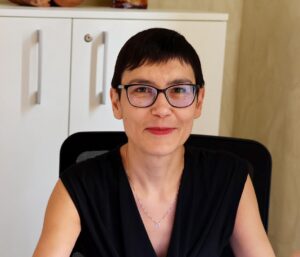
Speaker: Licia Boccaletti, Italy
Licia is the President of ANS, an Italian NGO committed to enhancing the well-being of care workers and informal carers. The organization delivers targeted training, psycho-social support, and counselling while actively shaping care-related policy.
Resilience in Practice: Combining Personal Strength and Organisational Support

Speaker: Sebastian Fischer, Germany
Sebastian’s background is in community development, he has worked for the carers advocacy movement in Scotland and Germany for 35 years, leading the development of many national and regional carer-led support organisations. Sebastian is a founder and Executive Committee member of Germany’s wir pflegen – Interessenvertretung und Selbsthilfe pflegender Angehöriger e.V., responsible for the development of peer support structures in Germany’s 16 Länder-states
The “Mental Health in All Policies” Approach: Towards Health-Supporting Work and Care Environments
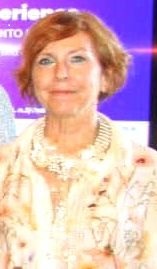 Speaker: Concetta Di Benedetto, Italy
Concetta Di Benedetto is an official at the Municipality of Palermo, working on corporate welfare, work-life balance, equal opportunities and anti-discrimination. With a background in social work and EU project management, she has extensive experience in promoting women’s rights and gender equality, including preventing gender-based and economic violence. She also represents the City of Palermo in several national and international networks and initiatives.
Empowering Carers through Peer Networks and Support Services

Speaker: Sara Branchini, Italy
Sara Branchini is an expert in participatory processes, facilitation, community building and social innovation. Since 2009, she has worked at Centro Antartide, an NGO promoting environmental and social sustainability, where she has served as Vice President since 2017. Her work focuses on health and welfare, including social inclusion, community welfare, young carers and the humanisation of healthcare, working with local authorities and communities to co-design innovative solutions.
Part 2: Audience Pulse (Poll) + Moderated Q&A (20-30 min)
- Live poll to capture participants’ perspectives
- Discussion with speakers, guided by audience questions
Closing Remarks & Next Steps (10 min)
- Summary of key insights
- Announcing next steps and upcoming webinars
Past webinars
Webinar #1
Unseen, Undervalued, Recognising the Real Value of Informal Care
The Invisible Workforce: The Role of Informal Carers in the EU

Speaker: Claire Champeix, Eurocarers
Claire has extensive experience in policy work, lobbying, research, and project coordination in the social field at local and European levels.
Before joining Eurocarers in 2016, Claire worked with various Brussels-based NGOs and collaborated with different EU institutions, notably in the social and human rights sectors. More specifically, she has focused on the fight against poverty and social exclusion, effective participation in policy-making, and the rights of persons with disabilities. She also worked for the social department of different local authorities in France for 7 years. Claire is a graduate of the Institut d’Etudes Politiques (Paris) and Université Paris Sorbonne (Sociology).
At Eurocarers, Claire is involved in various projects and policy initiatives, particularly in integrated Long-term Care, Cancer Care, training and skills, implementation of the EU Pillar of Social Rights, and the European Semester.
Estimating the Economic Value of Informal Care
 Speaker: Dr. Valentina Hlebec, Univerza v Ljubljani
Valentina Hlebec is a professor of sociology and has (co)authored 127 scientific articles, nine scientific monographs, and 40 chapters in the monographs of distinguished international (Springer, Hersey, Ashgate, Praeger, Friedrich-Ebert-Stiftung) and national publishers. She has been involved as a principal investigator several national (6) and EU projects (Wp leader 4), national P.I. (9). She has been active in national and international professional associations, and organizational work at the Faculty of Social Sciences and University of Ljubljana (Head of the Sociology Department, Vice-dean for Research, Head of the Habilitation Committee, vice-head of the Ethics Committee on Research at the Faculty of Social Sciences (ECRFSS) and head of Commission of the University of Ljubljana for Ethics in Research that Includes Work with People). She was (co)supervisor to nine doctoral students and young researchers. She has obtained a number of citations of her work (Wos – 915 citations, Scopus – 1285 citations within last ten years).
In 2025 she received award from Slovenian Research Agency – Excellence in research for co-authorship of the monograph (Long term care for people with dementia in Slovenia in theory and practice in social work).
Gendered Dimensions of Care Work
 Speaker: Mr. Evangelos (Angelo) Koutoumanos, Founder of NOESI.gr
Evangelos (Angelo) Koutoumanos is a Social Worker born in Athens in 1974. He holds a BA in Social Work and advanced degrees, including an MSc and MPhil/PhD, in Psychology and Social Policy. He has extensive experience in the disability sector, focusing on program coordination and evaluation in facilities for individuals with intellectual disabilities, autism, and mobility impairments. He is the Founder of NOESI.gr (established in 2004), a major resource hub for individuals with disabilities. He coordinated the nation-wide Mapping of the Disability Sector in 2015 in Greece. He has held directorship posts, including CEO of the Social Work Foundation and Managing Director of the Association for People with Disabilities “ERMIS”. He was also recognized as a “Hero of 2020” by readers of “Kathimerini”, the largest newspaper in Greece, for his work during the pandemic of COVID-19.
Best Practices in Raising the Visibility and Supporting Carers – A National Case Study
 Speaker: Ms. Emma Colao, ACUFADE
Emma Colao Corujo (born 1995, Agüimes, Canary Islands) is a legal expert and prominent social-rights advocate from the Canary Islands. She serves as Director of the Observatorio de Derechos Sociales de Canarias (ODESOCAN), where she leads research and monitoring on the fulfilment of social rights, with a focus on dependency care, housing, employment, and health. Emma also operates as manager at ACUFADE, one of the region’s leading organisations supporting people in situations of dependency and their families. With extensive experience advising more than 180 social-justice and community organisations, she is recognised for her commitment to equity, administrative efficiency, and the protection of vulnerable groups. Emma actively promotes policy innovation and works to strengthen public systems so that all individuals can access the rights and services they need.
Webinar #2
Breaking the Mold, Redefining Gender Roles
Cultural and Structural Roots of Gendered Care Roles

Speaker: Ana Ramovš, Medical Doctor and Researcher at the Anton Trstenjak Institute of Gerontology and Intergenerational Relations, Slovenia
Dr. Ana Ramovš is a medical doctor and researcher at the Anton Trstenjak Institute of Gerontology and Intergenerational Relations in Slovenia. Her work focuses on healthy ageing, preventive medicine, digital solutions, public health, geriatrics, and ethics. She supports the coordination of Slovenia’s intergenerational programmes network for quality ageing.
She has coordinated end-user pilot studies in several European projects, including NITICS, SEAM, and EcoSmart, and has contributed to research addressing health inequalities among older people. She trains volunteers and informal caregivers and has published on innovative training methods for carers in Frontiers. Alongside her research, she works as a medical doctor at the University Medical Centre Ljubljana.
Men as Family Carers: Overcoming Stereotypes and Barriers
 Speaker: Giuseppe Moscarelli, Disability Studies Researcher and Advocate, Italy
Giuseppe Moscarelli is an educator and disability advocate based in Palermo, Italy. Living with multiple sclerosis, he combines lived experience with academic expertise in Disability Studies, inclusive education, and social justice.
He holds a Master’s degree in Disability Studies, exploring disability as a cultural and narrative construct. He has organised two editions of Palermo Disability Pride and led workshops promoting the rights and dignity of persons with disabilities. As a father and advocate, he is committed to fostering inclusive and equitable societies.
The Benefits of Shared Responsibility: Impact on Families and Society
 Speaker: Heike Grebien, Former Member of the Austrian National Council and Spokesperson for People with Disabilities, Austria
Heike Grebien studied education and gender studies, focusing on norms of motherhood and women’s civic engagement. She served as a spokesperson for Styrian women during the 2017 women’s referendum and has been actively involved in initiatives promoting women’s rights.
As a former Member of the Austrian National Council and spokesperson for people with disabilities, she worked to strengthen the independence of women with disabilities. She currently teaches in a kindergarten, promoting diversity, equality, and inclusion from an early age.
Changing Mindsets: Campaigns and Policy Measures Promoting Men’s Involvement in Informal Care
 Speaker: Juhana Mäkitöyli Inclusive Care Advocate, Finland
Juhana Mäkitöyli works in a multi-professional child welfare team in Finland, providing holistic support to children and families. He lectures on the everyday life of a child with special needs from a father’s perspective and speaks about invisible differences in schools.
Through family home visits and educational work, he promotes practical, respectful support for families navigating diverse challenges. Above all, he is a father of five, a role that shapes both his professional commitment and personal values.
Webinar #3
Work, Informal Care, and Money
Combining Employment and Care: Barriers and Solutions

Speaker: Tjaša Potočnik, Research Assistant at the Faculty of Social Sciences, University of Ljubljana, Slovenia
Tjaša Potočnik is a Research Assistant at the Faculty of Social Sciences, University of Ljubljana. Her research focuses on long-term care policy and its outcomes, care inequalities, quality of life of older adults and informal caregivers, and the reconciliation of paid work and informal care.
Unpaid Care and Financial Strain: Understanding the Hidden Costs
 Speaker: Andrea E. Schmidt – Senior Researcher and Head of Department at the Austrian National Public Health Institute, Austria
Her work focuses on health system performance, long-term care economics, informal care, and the social and economic impacts of ageing and care systems. She has more than 15 years of experience in applied research at the interface of policy and practice.

Speaker: Viktoria Szenkurök – Researcher at the Austrian National Public Health Institute, Austria
Her research focuses on health economics, long-term care, ageing, and working conditions in the care sector, with particular attention to socio-economic inequalities and comparative analysis across countries.
Rights and Benefits for Carers: Accessing Support and Building Security
 Speaker: Simona Durisova, IG24, Initiative for Justice in Live-in Care in Austria, Austria
Simona Durisova – Co-founder of IG24 – Initiative for Justice in Live-in Care in Austria, an organisation supporting migrant live-in carers through counselling, advocacy and efforts to improve working conditions in the care sector.
Dual-Role Carers: When Work and Home Care Overlap

Speaker: Emily Holzhausen – Director of Policy and Public Affairs at Carers UK and member of the Board of Directors of Eurocarers.
Emily is a leading expert on carers’ rights and care policy in the UK, with extensive experience in translating evidence into practical policy solutions and strengthening advocacy for carers across Europe.
Part 2: Audience Pulse (Poll) + Moderated Q&A (20-30 min)
- Live poll to capture participants’ perspectives
- Discussion with speakers, guided by audience questions
Closing Remarks & Next Steps (10 min)
- Summary of key insights
- Announcing next steps and upcoming webinars
Project Description
EQUAL CARE: Enhancing Gender Equality in the Disability Care Sector
Funding programme:
CERV
Project Leader:
European Association of Service providers for Persons with Disabilities (EASPD)
Project description:
The objective of EQUAL-CARE project is to address the underlying factors contributing to the gender care gap both in the formal and the informal disability care and support sectors. By fostering gender inclusion in care through a gender-transformative approach, it aims to mitigate gender segregation, discrimination, and stereotypes. Recognising the deeply entrenched gender dynamics within caregiving, both formal and informal, the project acknowledges the need for holistic approaches to reduce gender disparities. By actively working to reduce gender segregation and discrimination, the project seeks to create a more gender inclusive workplace in the formal disability care sector, aligning particularly with the Gender Equality Strategy and the Work-Life Balance Directive.
The project also acknowledges the intersectional discrimination faced by women in the care sector, considering factors such as race or disability-based discrimination, which further compound the challenges they encounter.
Contact Details
For enquiries about the EQUAL CARE project, please contact Svetlana Atanasova