From minimum standards to meaningful support: Eurocarers calls for stronger work-life-care policies
On European Carers Day 2026, Eurocarers publishes a new position paper examining whether the EU Work-Life Balance Directive is delivering meaningful support for informal carers.
For millions of people across Europe, combining paid work with caring for a family member, partner or friend remains a daily challenge. Care is unpredictable: appointments change, emergencies happen, health conditions fluctuate and caring responsibilities can arise at any time. Yet workplaces and support systems often remain organised around fixed schedules.
The EU Work-Life Balance Directive was an important step forward. For the first time, it introduced EU-level minimum standards specifically addressing the needs of carers, including five working days of carers’ leave per year and the right to request flexible working arrangements.
But are these rights enough?
From rights on paper to impact in practice
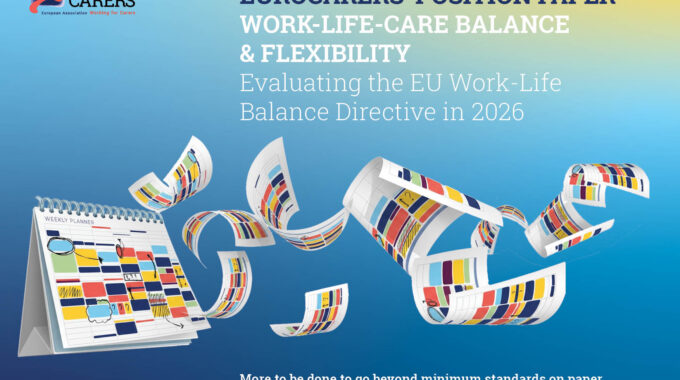
In its new position paper, “Work-life-care balance and flexibility: Evaluating the EU Work-Life Balance Directive in 2026”, Eurocarers looks at how these rights have been implemented across Europe and asks whether they are sufficient to enable informal carers to genuinely combine work and care.
The analysis highlights important gaps. Five days of leave can help with an appointment, an emergency or a change in care arrangements, but cannot address longer-term or intensive care needs. And because the Directive does not require carers’ leave to be paid, many carers may not be able to afford to take it.
Similarly, having a right to request flexible working does not guarantee that the flexibility a carer needs will actually be available.
When work and care cannot be reconciled, the consequences can be significant. Informal carers may reduce their working hours, take unpaid leave, scale back their responsibilities or leave employment altogether, affecting their income, social protection, pension rights and wellbeing.
What needs to change?
Eurocarers is calling for a stronger approach that moves beyond minimum standards and makes carers’ rights meaningful in practice.
The position paper recommends, among other measures:
- Paid and adequately compensated carers’ leave, flexible enough to reflect different care situations;
- A stronger right to flexible working, moving beyond the right to request towards a right to obtain appropriate arrangements where possible;
- Protection of social security and pension rights for people providing care;
- More inclusive and accessible rights for different caring situations;
- Carer-friendly workplaces, supported by greater awareness, appropriate workplace cultures and better support for employers;
- Affordable, accessible, high-quality care and respite services, recognising that workplace flexibility cannot replace adequate care services.
A timely contribution to the EU review
The position paper comes at an important moment. Member States are required to provide information on the implementation and take-up of the Directive, while the European Commission will undertake further monitoring and assessment in the coming years. Eurocarers aims to ensure that the experiences and needs of informal carers are fully reflected in this process.
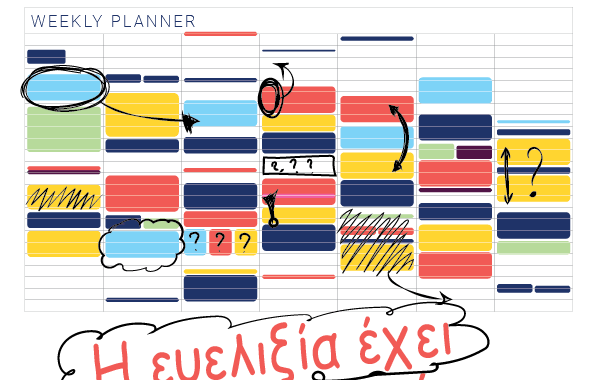
Care doesn’t follow a schedule. Flexibility matters.
The position paper is part of Eurocarers’ European Carers Day 2026 campaign, which brings together the voices of informal carers, employers and organisations across Europe to highlight what meaningful flexibility can look like in practice.
Read the full position paper here
Explore the European Carers Day campaign