
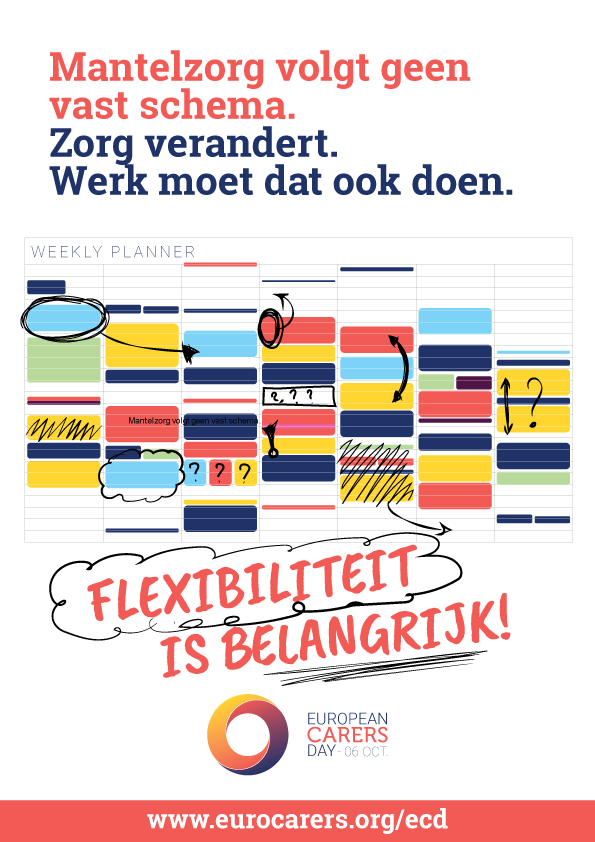
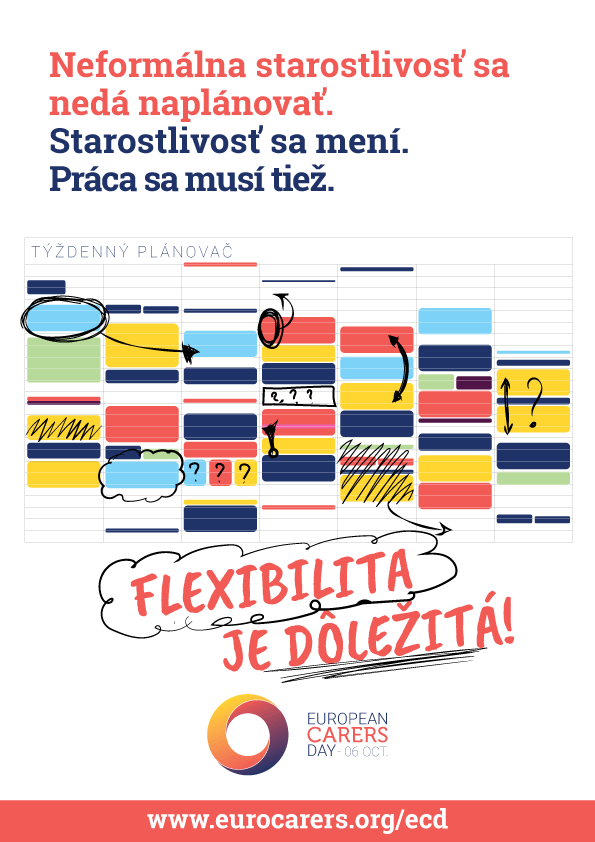
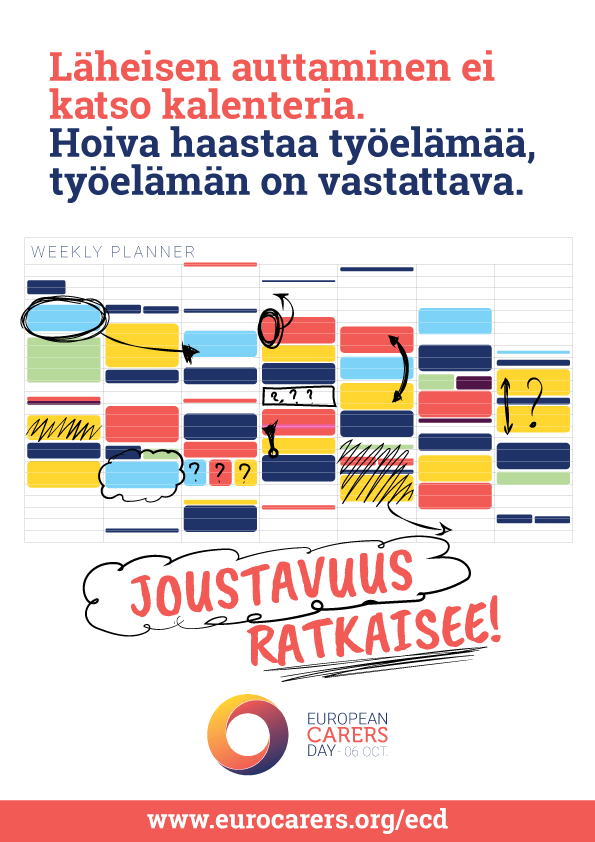
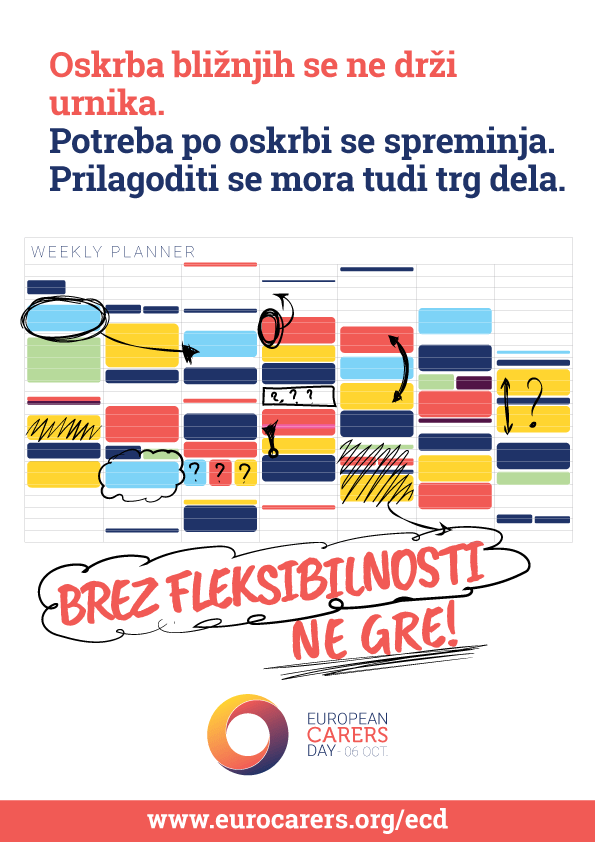
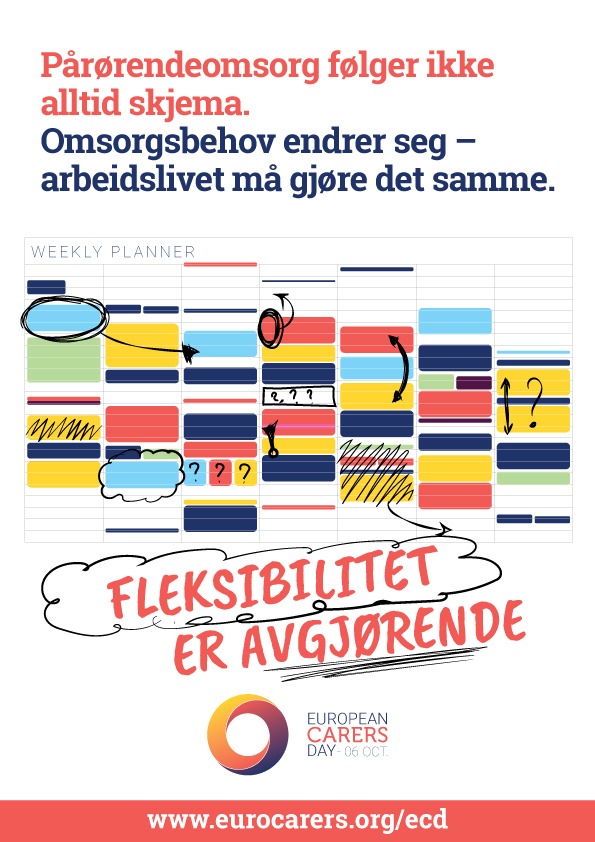
Informal care doesn’t follow a schedule.
Care changes.
Work must too.
Across Europe, millions of informal carers balance paid work with caring for a family member, friend or neighbour. But care rarely fits neatly into a calendar. Appointments change, emergencies happen, conditions fluctuate and caring responsibilities can arise at any moment.
EUROCARERS' POSITION
WORK-LIFE-CARE BALANCE & FLEXIBILITY
Evaluating the EU Work-Life Balance Directive in 2026
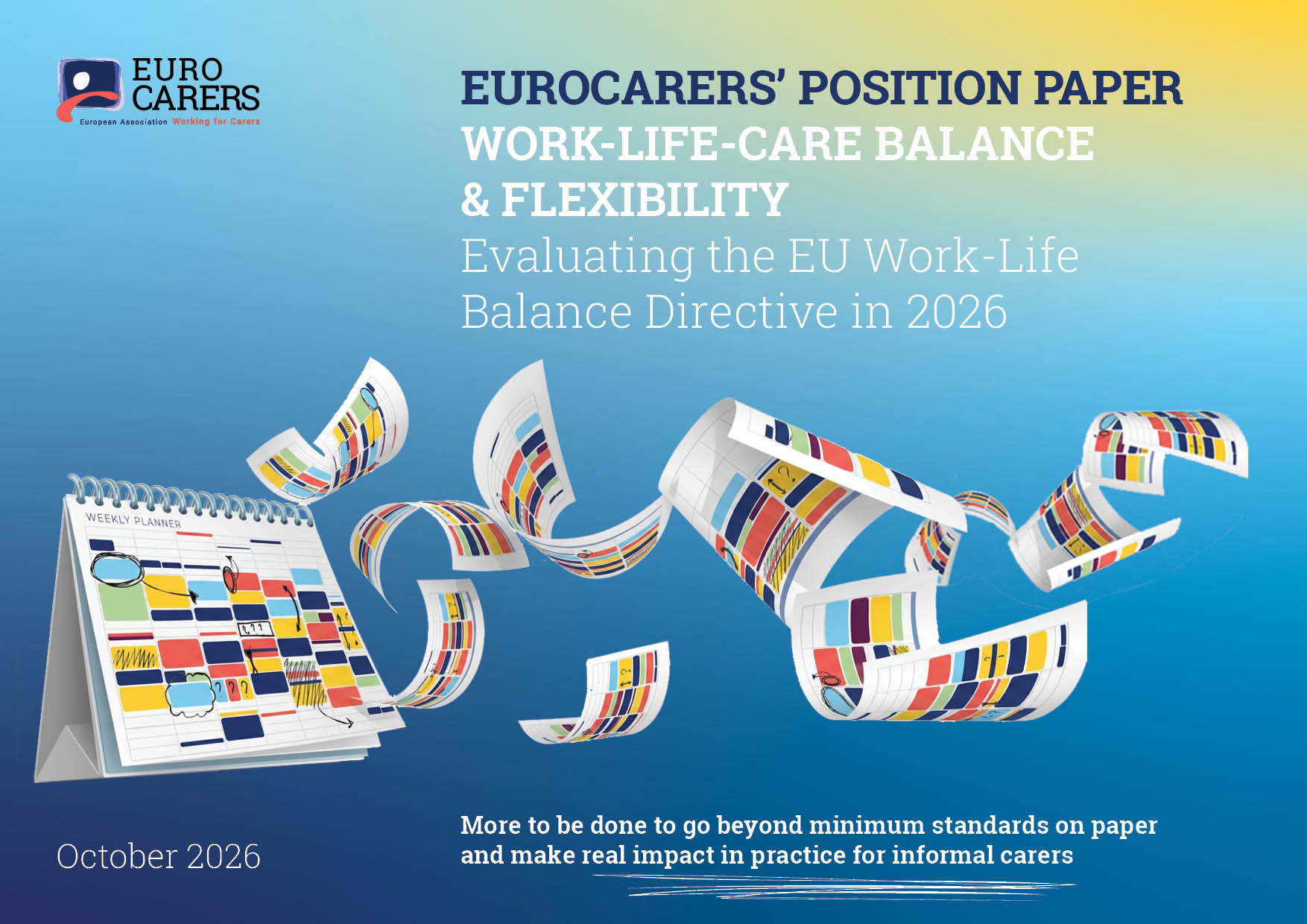
Our new position paper examines whether the Directive’s minimum standards are delivering meaningful support for informal carers in practice. Drawing on insights from our members across 26 European countries, it highlights where progress has been made, and where more needs to be done to ensure carers have the flexible, comprehensive support they need to combine work and care, avoid financial insecurity and protect their health and wellbeing.
JOINT STATEMENT
WORK-LIFE-CARE BALANCE & FLEXIBILITY
Evaluating the EU Work-Life Balance Directive in 2026
This Joint European Statement, signed by Eurocarers and sister organisations working across disability, families, mental health, gender equality, ageing and care, calls for European policies and workplaces that recognise the unpredictable reality of care.
It sets out a shared vision for making flexibility a reality for people who combine work and care.
THE REALITY OF CARE
A day that didn't go as planned
This is not a special case. It’s an ordinary Tuesday for millions of carers balancing a job with caring for a parent, partner or child.
08:05
Hospital calls about a change in mum's treatment plan.
09:00
Team meeting starts. Informal carer joins late, quietly rearranging the day.
11:20
The evening appointment is moved forward.
14:30
School calls. A second, unrelated interruption.
18:00
Work ends. Caring continues, unpaid and unscheduled.
22:00
Finally some time for one-self. Oh wait, no...
Care is unpredictable.
Life should be flexible enough to respond.






WHY FLEXIBILITY?
Flexibility is not a privilege.
It is essential.
When work, care services and policy flex around the reality of caring, everybody benefits.
IN PRACTICE
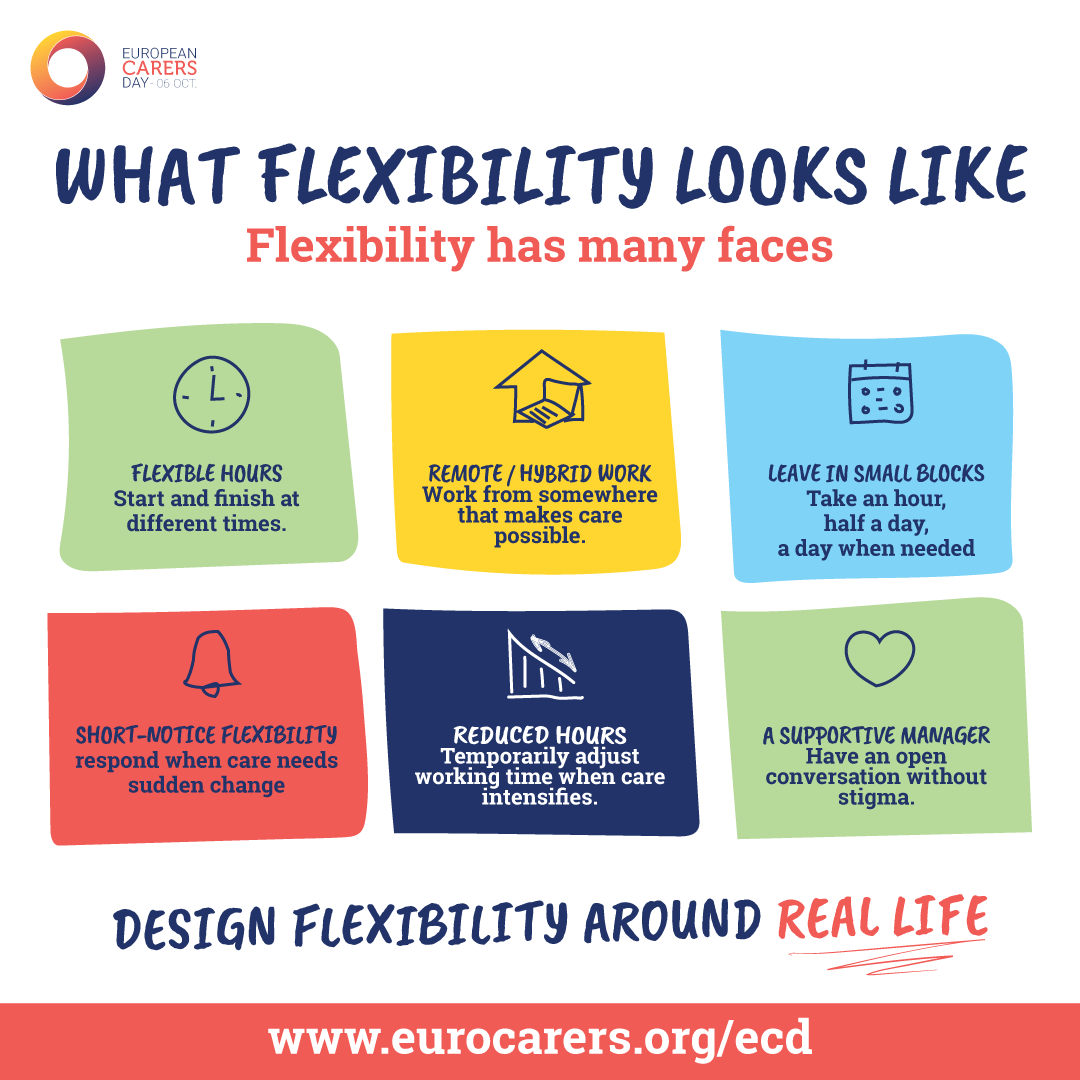
What flexibility looks like
Not one unachievable policy: six small, practical shifts that add up.
REAL STORIES
Voices of flexibility
Carers from across Europe on what flexibility has meant for them, and what is still missing.
Life assurance, pensions and long-term savings company Standard Life is known for its flexible working policies. These benefit any employee, including unpaid carers. In the 10 years since it was introduced, the development of Standard Life’s Carer Policy has improved carer identification and helped create a more open, carer-friendly workplace.
Lynn Forrest is chair of the Carers Network at Standard Life, alongside her main role of Vulnerable Customer Manager and her caring role for her brother. He has a brain injury which has led to epilepsy and issues with memory, knowledge, understanding, and confidence. Up until last year, Lynn was also caring for her mum for 10 years, who had dementia.
Lynn’s double caring role has informed her work on the Carer Policy. Throughout this period, she has also worked full-time as a Vulnerable Customer Manager, which involves designing services that help carers. As chair of the Carers Network – now with over 100 members – she has become an unofficial carer champion at Standard Life. “People come to me when they want to talk about how their caring role impacts their work.”
Flexible working is widely used across Standard Life, with some people reducing their hours, some doing a 9-day fortnight, or others working entirely remotely. They also offer support for new parents and emergency leave options. “There’s no norm,” Lynn says. “And we do as much as we can to help people stay in the company.”
As well as flexible working options, carer support has increased in the last few years – starting with just 3 days paid carers leave, they now offer 10 days paid and 3 days unpaid. At the same time, awareness of the Carer Policy has improved, as Lynn and other managers have been proactive in sharing it regularly during internal meetings.
This has created a positive snowball effect, where line managers are role modelling carer-friendly behaviour by openly talking about their own caring responsibilities and need for flexible work. More employees are now using their carers leave, where previously they would have used sick days or annual leave.
“It’s amazing that so many carers feel more comfortable talking about their caring responsibilities now, and that they’re getting the support they need,” Lynn says. “Our network reflects this, and I know we’ve helped many more carers beyond that, too.”
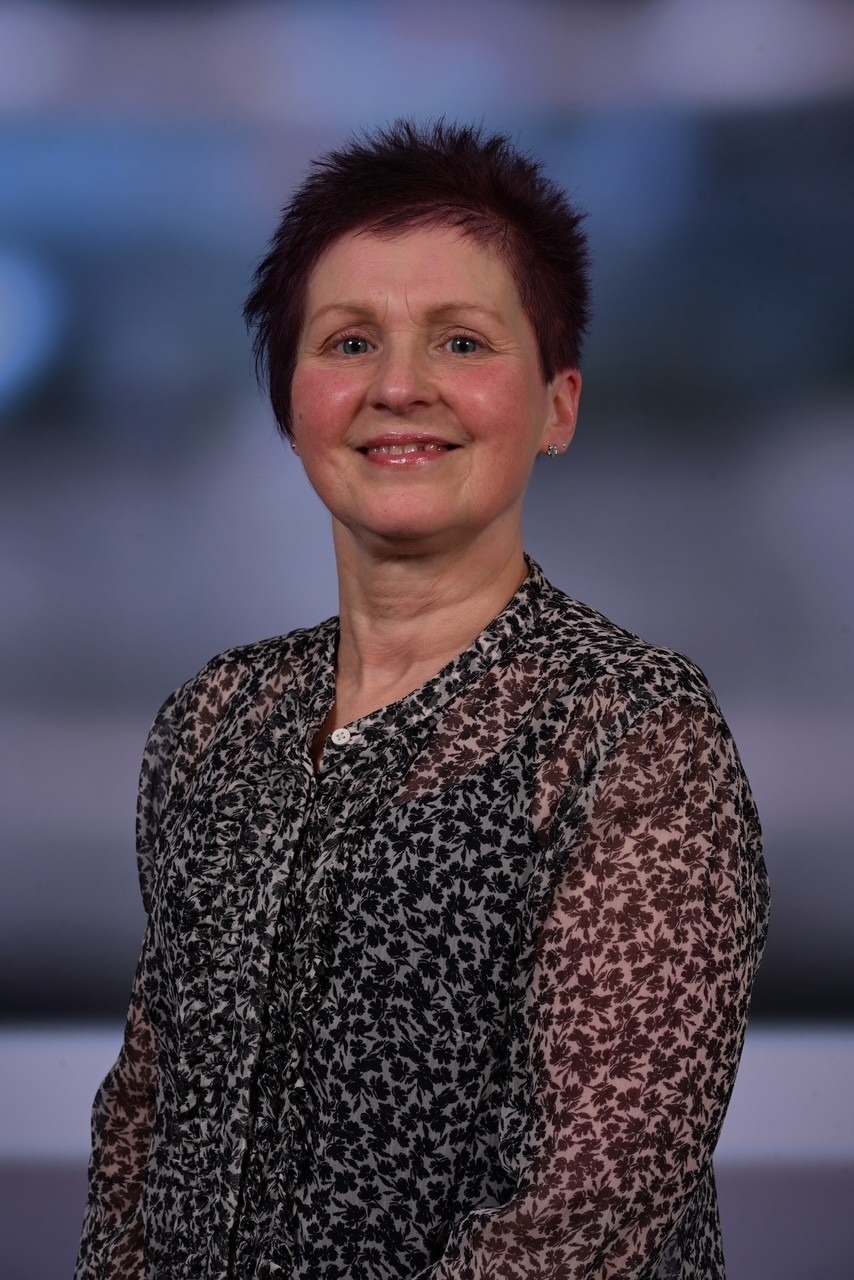
Jennifer Martin has a double caring role and works as Operations Manager at Bright Sparks, where she has led their creation of a Carer Policy and Carers Passport. Bright Sparks offers play opportunities for children and young people with Additional Support Needs in Midlothian. They achieved Carer Positive accreditation in 2025.
As a small charity supporting and working with a lot of parent carers, flexible working has always been built into Bright Sparks’ culture. Jennifer is proud of their approachable management: “It’s great that so many staff feel comfortable asking to cover each other’s shifts, or leave early when their caring role demands it.”
Jennifer cares for her elderly mother and her autistic son (age 24). She also cared for her father before he died earlier this year. She has been a parent carer for her son’s whole life and supported by VOCAL for most of that time, too. Since being introduced to VOCAL by a friend, she has accessed various services including counselling, Power of Attorney advice, and peer support groups. In recent years, she’s also had professional involvement through the Employers’ Network.
Jennifer’s caring roles have informed her work on Bright Sparks’ Carer Policy. She had previously heard about Carer Passports but, without her own experience and passion for supporting other carers, she might not have recognised how impactful carer-positive workplaces can be. For example, Bright Sparks allows staff to take carers’ leave in hours, rather than full days – which is especially valuable in an organisation where most people are on part-time contracts.
Jennifer continues to support carers in other ways, such as meeting local carer support groups through our Midlothian Carer Community Fund and encouraging Bright Sparks parents and carers to register with VOCAL if they haven’t already.
She believes the next challenge to tackle is the stigma around unpaid caring. More employers should not only put the policies in place, but also promote a carer-friendly culture where people can talk about it safely.
“If carers’ leave is there as a statutory right, we should be as open about it as we are with annual leave or sick leave,” she says. “And if even a small charity like ours can support carers, then anyone can.”
“It is true that care doesn’t follow a schedule. Women know it too well, as they are often the ones who bear the bulk of care responsibilities – childcare, household tasks, care for the elderly or dependent relatives. For many mothers and carers, not having the possibility of flexible work arrangements will mean they will have to reduce working hours, take unpaid leave or leave employment entirely. For women, this means more than missed career opportunities: it directly contributes to the gender employment, pay and pension gaps, as well as hindering women’s ability to participate in public life.
Flexibility alone is not enough to close these gaps, but it does give a fairer chance to carers, to women. While we must work towards a equal-earner, equal-carer model and the promotion of a more equal sharing of care responsibilities between men and women, flexibility is not a shortcut but a necessary pre-condition to achieve it.”
Older people are the invisible backbone of care, and too often care duties falls on older women. For many of them, caring responsibilities come on top of a lifetime of inequalities. Flexible work is not a privilege, it’s what allows carers to remain employed, healthy, financially secure and continue caring with dignity.
Flexibility can only work through simple and adaptable procedures that ensure a fair balance of rights for both workers and employers.
Elena is a trained pharmacist living in Eastern Slovakia. After the birth of her daughter who has Down syndrome, she stayed home for 20 years due to the unavailability of formal care for her daughter. Elena recently received a place in school where she can place her daughter for half a day. Elena hence started preparing for her return to work through participating in a mentorship and job coaching program for women called Women’s Algorithm. She successfully landed a job in a pharmacy, and her employer agreed with a half-time work arrangement. Elena is now able to combine the care for her daughter with working in her field of expertise. Her daughter gets to socialize with other young people, and the employer found a reliable worker to fill a vacancy.
“I will never forget and be forever grateful that my employer told me when my mom was dying and I needed to fly home immediately that ‘family comes first and we will cover you in your absence. Take the time you need’”.
“Without this I think I would not be able to manage full-time work and caring responsibilities.”
“Carer’s Leave is the poor relation of family leave policies.”
“I saw that there was a lot I could have done from home. But my application for a temporary teleworking position was rejected.”
“Teleworking makes this juggling act easier.”
“People often want to keep working, but they need flexibility.”
DOWNLOADS
Campaign resources
Everything you need to take part, branded and ready to use.
Infographics



Translations

We thank Merck for its continuous financial support to this campaign.

Last Updated on August 24, 2026


